Farm to school in rural Louisiana restores local food connections

NFSN Staff
May 4, 2016

By Nicole Mabry, Louisiana Farm to School Alliance

Rory Gresham leads a tour of the Richland Parish School Board hydroponic growing system.
(Photo credit: Jason Van Haverbeke)

In the transnational push for more sustainable local food systems, rural communities face unique challenges that city-centric conversations can fail to capture. Across Louisiana, rural parishes are finding innovative, collaborative ways to revitalize local food economies that can often feel disinvested from the community. Leading this movement to stimulate local food systems in rural Louisiana are schools.

With support from Seed Change, a National Farm to School Network initiative aimed at expanding farm to school activities at the state and community levels, and the Louisiana Farm to School Alliance, a statewide network of organizations working in food, farming, nutrition and education, schools across the state are bringing fresh, healthy food into cafeterias and increasing food and agricultural literacy in the classroom.

A look at three different rural Seed Change Louisiana sites offers a glimpse into how dedicated educators, administrators and growers are finding fresh ways to restore connection and inspire growth through school food.

Richland Parish School Board

Since the beginning of 2016, Richland Parish School Board’s greenhouse program has supplied their Food Service Department with more than 4,200 heads of lettuce to be served in the district’s twelve schools. This is particularly impressive considering the greenhouse is only 20x48 feet – or roughly the size of two adjacent school buses. Serving as a Seed Change Demonstration Site in northeast Louisiana, Richland Parish School Board invested its Seed Change grant funding into building the greenhouse along with the high-efficiency hydroponic growing system it houses. Rory Gresham, greenhouse manager for Richland Parish School Food Service, has noticed a considerable increase in the amount of greens the students are eating. “It’s amazing how many students come up and tell me that they didn’t know lettuce had a taste,” he says. Far beyond the cafeteria, Richland’s hydroponic greenhouse is also having an impact across the region. Gresham regularly hosts visitors from throughout the south who are eager to replicate this innovative system in their own school districts and communities. With a professional internship program in partnership with the local university slated to begin next year, Richland may well have a hand in producing a new crop of Louisiana farmers along with its lettuce and tomatoes.

Northwest High School, Opelousas
Cody Manuel, agriculture teacher at Northwest High School and Seed Change Louisiana mini-grantee, often views his classes as a hands-on course in communication skills. Inspired by a Seed Change training held at the Richland Parish School Board Demonstration Site, Manuel hopes to expand his existing garden based curriculum and small-scale hydroponic growing system where he says students are learning meaningful career skills such as, “How to accept constructive criticism, how to work together, how to communicate.” Manuel adds that he’s noticed a niche market emerging for high quality, locally grown crops, and students in his classes are also taking note. Manuel hopes Northwest’s farm to school program will support students’ entry into sustainable farming. “Those that enjoy growing things and see there’s money to be made in it, they’ll pursue it. I think it’s going that way, it’s not just a trend.”

LaSalle Parish School Board

Kelly Thompson, Child Nutrition Supervisor at LaSalle Parish Schools and lifelong gardener, has always been attracted to the idea of incorporating gardening into classroom curriculum. “What a great way to teach students leadership, responsibility and to help them develop a sense of place about our community,” she says. After being selected as a Seed Change Louisiana mini-grantee, Thompson was able to turn her vision into reality. Equipped with training and funding, raised bed gardens have been installed at all four of LaSalle Parish’s elementary schools – and the impacts have been noticeable. “Students having so much fun and smiling. Even their behavior has changed, with a new peace and calmness.” The gardens are also gaining interest and support from many in the community. Some of the community’s most knowledgeable local gardeners now volunteer and are helping to keep the gardens thriving. Through these school-community partnerships, LaSalle Parish is restoring the community’s intergenerational knowledge of the land and teaching the parish’s littlest learners how to grow.
(Photo credit: LaSalle Parish School Board)

Funding and support provided by Seed Change has sparked an upwelling of new opportunities for farm to school projects across the region. Katie Mularz, Executive Director for the Louisiana Farm to School Alliance and Seed Change State Coordinator said, “Even modest farm to school funding supports schools to be innovative agents of change—leading the way to healthier, more sustainable systems while addressing community needs and inspiring youth to see a brighter future.”

Learn more about the National Farm to School Network’s Seed Change initiative and how we’re growing farm to school state by state here.

Seed Change in Kentucky, Louisiana and Pennsylvania is made possible by a generous grant from the Walmart Foundation, which shares the National Farm to School Network’s commitment to improving child and community healthy through innovative partnerships.
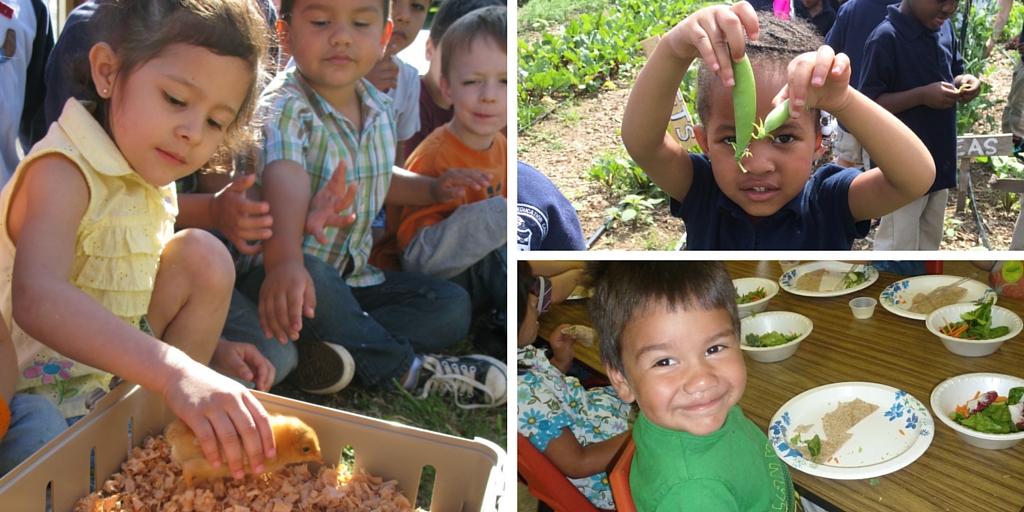
The Results Are In: Farm to School in Early Childhood Supports Healthy Kids with Bright Futures

NFSN Staff
April 13, 2016

By Lacy Stephens, Farm to Early Care and Education Associate


With 8 million children spending an average of 33 hours per week in early care and education settings, farm to school has the potential to set up a great number of young children for a lifetime of health and wellness. New survey results from the National Farm to School Network show just that: farm to school in early childhood is promoting healthy eating habits and providing high quality learning environments for thousands of children at a critical stage of development.

In 2015, the National Farm to School Network surveyed early care and education providers across the country to better understand current initiatives, motivations and challenges in applying farm to school activities in early care and education settings. Nearly 1,500 providers serving 183,369 young children in 49 states and Washington, D.C., responded and shared insight into the important work that they are doing to connect young children to healthy, local foods and food related educational opportunities.

We found that more than 50 percent of respondents were already incorporating farm to school activities into their early care and education settings and another 28 percent plan to start in the future. That means thousands of young children are benefiting from farm to school activities like learning where food comes from, planting and tending gardens, and eating locally grown food in meals and snacks.


Teachers and early care providers agree that farm to school activities help create high quality learning environments that promote life long health and wellness, which are important priorities for children, providers and parents. Respondents identified these as their top three motivations for participating in farm to school:  


  • Teaches children about where food comes from and how it is grown (95%)
  • Improves children’s healthy (95%)
  • Provides children with experiential learning (94%)

One child care provider summed it up this way: “The farm to preschool movement makes our programs better in every way.” Farm to school activities are helping early care and education providers reach their goals of setting young children up for a lifetime of health and success.


Want to learn more about the survey results and the role of farm to early care and education in supporting healthy kids and high quality educational opportunities? The National Farm to School Network has developed an infographic and fact sheet highlighting key information from the survey. A complete summary of the survey results will be available in mid-May.

Help us reach reach more young kids, families, providers and communities with the many benefits of farm to school for all ages. Share the results of the survey with 5 people you know who care about our next generation, join the National Farm to School Network and connect with farm to school and early care and education leaders in your region. Get started by clicking below!


EXPLORE THE RESULTS

2016 Innovation Awardees

NFSN Staff
April 12, 2016


As the backbone organization for the U.S. farm to school movement, the National Farm to School Network has the privilege to work with some of the country’s most enthusiastic, invested and creative organizations and individuals toward a future where all children, farmers and communities have the opportunity to benefit from farm to school activities. Our Core Partners are the farm to school leaders bringing these strategies into schools and communities at the state and regional level, expanding our capacity to keep this grassroots movement growing across the country.

With funding support from Newman’s Own Foundation and Farm Credit, the National Farm to School Network presented Innovation Awards in February 2016 to three new projects by our Core Partners in Georgia, the Great Lakes and the Northeast in celebration of their efforts to advance farm to school and to share their knowledge with practitioners. This year’s theme, Engaging Farmers and Producers in Farm to School, inspired projects that will use creative approaches to outreach and resource development to bring new farmers and producers into the farm to school movement.  

Projects will take place throughout 2016, and each will result in the creation of shareable information resources for farmers and farm to school practitioners about innovative strategies to engage farmers that can be used across the country. From sustainable fisheries to preschool pop-up markets, the following projects will highlight creative farm to school approaches that can inspire new opportunities in your community:

Sea to School in New England
Maine Farm to School, Massachusetts Farm to School, New Hampshire Farm to School
Award: $5,000 // Estimated completion by October 2016
Three Northeast states will create a Sea to School resource guide based on New England efforts including: case studies, best practices, recipes and an educational video appropriate for elementary school classrooms about sustainable fishing and aquaculture in the Gulf of Maine. To the extent possible, farmers/fishers will be engaged in this project and sea to school work through state and regional conferences and events throughout 2016.

Growing Farm to School by Sharing Farmer Stories

University of Wisconsin, Madison - Center for Integrated Agricultural Systems
Award: $5,000 // Estimated completion by October 2016
The six Great Lakes states will team up to develop a series of short videos featuring conversations between regional farmers and food service directors who have good working relationships. This series of professionally filmed and edited videos will highlight a diverse collection of farmers, production methods, success stories and relationships between farmers and food service directors.

Pop-Up School Market: Engaging Farmers at Preschools
Georgia Organics
Award: $5,000 // Estimated completion by December 2016
This project will pilot 10 pop-up farmers markets at childcare facilities across Georgia as direct marketing opportunities for small/medium family farmers, while engaging parents in farm to school through incentives to purchase, cook and eat healthy farm fresh food at home. Nutrition education and cooking demonstrations will be provided at the pop-up markets, and to the extent possible, farmers will be able to accept WIC vouchers. A shareable guide to pop-up markets will be produced as part of the project.

View an overview of the 2016 and 2015 Innovation Awards here.

Help support more innovative ideas like these by making a donation to the National Farm to School Network. Your donations mean more healthy meals for students, more opportunities for farmers and more communities connecting around local food.

Help farm to school grow by making a donation today!

DONATE NOW


We agree: child nutrition programs should be about making kids healthier

NFSN Staff
March 24, 2016

By Donna Martin, EdS, RDN, LD, SNS, FAND, School Nutrition Program Director, Burke County Board of Education and Incoming President-Elect of the Academy of Nutrition and Dietetics and Erin McGuire, Policy Director, National Farm to School Network


We couldn’t agree more: child nutrition programs should be about raising a generation of healthy kids. A recent article published in Politico’s The Agenda makes the case that the Child Nutrition Act (CNA) historically has supported farmers not children, stating, “The School Lunch Act, in fact, has served a scrum of agricultural and other interests for the entire 70 years it has existed, each angling for a bigger share of the federal lunch plate.” With this statement we take no issue – agriculture has long had a vested interest in child nutrition programs and what goes on the plate of future consumers.

The author further elaborates on the USDA Farm to School Grant Program saying,  “Nor is it clear how kids will be aided by grants to ‘increase awareness of, and participation in, farm to school programs.” This could not be further from the truth unfolding at farm to school sites across the country. In this multi-billion dollar bill that historically has served to put calories – of any kind – on the plates of children, advocates have fought hard to put in place programs that support nutrition education like the USDA Farm to School Grant Program.

The USDA Farm to School Program was established with a $5 million allocation in the Healthy Hunger-Free Kids Act of 2010 (the last iteration of CNA). The program helps schools and other eligible entities support farm to school activities in their communities. Supported activities include identifying community stakeholders, purchasing product from local and regional farmers and processors, building school gardens, taste-testing curricula and farm field trips. The program has been incredibly successful, having a 5-1 demand to supply ratio, with 75 percent of grants made to schools, education and public health agencies, and non-profits.

On the frontlines, communities are experiencing incredible behavior change and nutrition benefits from incorporating farm to school activities.  In Georgia, we have increased student consumption of green leafy vegetables with the addition of local collard greens – a farmer went so far as to tweak his soil to grow less bitter greens for our students! And we did away with french fries in the cafeteria after students went crazy for roasted red ranch potatoes purchased from a local grower. This isn’t just what we have seen in Georgia and across the country – it’s what the data shows. Students who participate in farm to school activities eat more fruits and vegetables, are willing to try new foods, consume less unhealthy foods and sodas and choose healthier options in the cafeteria and at home.


In the delicate state of the CNA’s Reauthorization this year, those who support this win-win strategy for students, farmers and communities have managed to eke out another $5 million dollars for this important grant program in the Senate draft. In a tough fiscal climate, Chairman Roberts and Ranking Member Stabenow have prioritized support for farm to school programs that help children, and in many rural areas, also support farming families. We commend the Senate Agriculture Committee’s leadership during this reauthorizing year – yes, they brokered a deal, and it included an increase in summer feeding programs (one of the most vulnerable times for hungry children) and protected healthy meal standards for children. Those mired in the fight for better child nutrition support swift passage of this bill in the Senate, because decisions impacting the health of our future generation should not be delayed any further.

The National Farm to School Network, the National Sustainable Agriculture Coalition, and the Academy of Nutrition and Dietetics have made policy recommendations to increase the flexibility of potential recipients of USDA Farm to School Grants to include summer feeding and after-school programs, as well as to increase farmer participation – an essential aspect of farm to school activities. As the author notes, we have also supported language for more, “culturally appropriate” foods at schools serving Native Indian students.”  We 100 percent stand by that. For too long the significant barriers to using culturally appropriate food in school cafeterias have been ignored. We should celebrate the rich diversity of agriculture products and traditional dishes in our country, and be able to serve them on school lunch menus.

The USDA Farm to School Grant Program is one of the smallest grant programs, and yet a very effective nutrition education program in the Child Nutrition Act. When we talk about increasing nutrition for children at this important moment, it is essential that nutrition advocates protect what little we have and push for more, not call into question hard-fought and won programs that help students be healthy.

Join us in urging Congress to continue its support of farm to school success by signing our petition. Add your name in support today.


Census says: farm to school is booming!

NFSN Staff
March 15, 2016

By Natalie Talis, Policy Associate


Today, the USDA released new data from its 2015 Farm to School Census and the results are clear: farm to school is booming! Thanks to efforts from teachers, school nutrition professionals, farmers, parents, students and other community members like you, farm to school activities have grown from a handful of schools in the late 1990s to reaching 23.6 million students nationwide.

According to the data, 5,254 school districts - a total of 42,587 schools across all 50 states and Washington D.C. - participate in farm to school activities, including serving local food in the cafeteria, holding taste tests and taking students on field trips to farms and orchards.

During the 2013-2014 school year, these schools purchased $789 million worth of local products from farmers, ranchers, fishermen and other food producers. That is a 105% increase over the $386 million of local food purchased in 2011-2012 and a huge investment in community economic development. Furthermore, 46 percent of school districts reported they will increase their local food purchases in coming school years. While fruits, vegetables and milk currently top the list of foods schools are most likely to buy locally, many indicated that they’d like to buy more plant-based proteins, grains, meats, poultry and eggs from local suppliers.

Forty-four percent of the school districts also reported having at least one edible school garden. In school year 2013-2014, more than 7,101 school gardens gave students daily access to fresh fruits and vegetables, while also helping them learn where food comes from. This is a 196 percent increase over the 2,401 edible school gardens reported in the 2011-2012 school year when the first census was conducted.

Photo Courtesy: USDA Food and Nutrition Service

The benefits of farm to school activities like these are far reaching. Sixty-six percent of school nutrition director respondents reported experiencing one or more of the following:

  • Greater community support for school meals
  • Greater acceptance of school meal standards
  • Lower school meal program costs
  • Increased participation in school meals
  • Reduced food waste

These benefits, in addition to positive economic opportunities for local food producers, explain why farm to school is on pace to continue growing. Of the more than 12,500 school districts that responded to the survey, more than 2,000 indicated they plan to start farm to school activities in the future.

The high interest in these activities confirms why the National Farm to School Network continues its advocacy for supportive policies at the national, state and local levels that will help the farm to school movement grow. To ensure that more school districts feel empowered to start new programs or expand their existing work, we’re advocating for policies like the Farm to School Act of 2015 to be included in the Child Nutrition Act Reauthorization (CNR). We’re calling on Congress to strengthen and expand the USDA Farm to School Grant Program so more communities have access to farm to school. Show your support for farm to school by adding your name to our petition here.

See how your school district stacks up by visiting the census map, which provides detailed information on all 18,000 surveyed school districts. Want to help farm to school efforts in your community grow? Check out our tips for getting started, or contact your National Farm to School Network State or Regional Lead for local information, resources and opportunities.

Farm to school is a grassroots movement powered by people like you - congratulations for your work in helping farm to school grow! Join us at 8th National Farm to Cafeteria Conference in Madison, Wis., this June to continue building momentum and ensure long-term sustainability for local food efforts like these around the county. As this census data shows, together we have the power to affect great change!

Celebrating good nutrition for our littlest eaters

NFSN Staff
March 14, 2016

By Lacy Stephens, Farm to Early Care and Education Associate

Credit: Taking Root Tennessee

Along with the onset of spring, March brings with it many ways to celebrate good nutrition for our littlest eaters. With warmer days comes opportunity for planting spinach and radish seeds and savoring the first tastes of sweet peas and baby greens. March is also National Nutrition Month, a time devoted to celebrating good nutrition for all, as well as National Child and Adult Care Food Program (CACFP) Week, a national campaign aimed at raising awareness about the benefits and importance of the USDA CACFP program.

The CACFP program provides 1.9 billion meals and snacks to over 3.2 million children in child care centers, family child care homes and after-school programs each year. In addition to ensuring access to nutritious food for children in child care settings, the program also aims to support nutrition education and positive eating habits.

In celebration of these important awarness campaigns, we’re recognizing the work of organization like Taking Root Tennessee, which aims to influence a generation of children to be healthy eaters by exposing them to fresh, healthy foods. To do this, Taking Root Tennessee offers gardening opportunities for young children by building gardens and providing tools, technical assistance and curriculum to early care and education providers.


For Joshua Smith, Program Coordinator, and Phillip Hester, Program Director, expanding garden education is a natural extension of the work of Taking Root Tennessee’s parent organization, Our Daily Bread of Tennessee. As a CACFP sponsor, Our Daily Bread facilitates the administration of the CACFP program to over 300 family child care homes, child care centers, at risk afterschool programs, and summer food programs, reaching nearly 10,000 children with healthy meals and snacks each day.

The gardening experience offered by Taking Root Tennessee supports the CACFP aims of contributing to the nutrition knowledge, wellness and healthy growth of young children. As Smith notes, the CACFP meal requirements ensure children are offered fruits and vegetables, while farm to school activities, like gardening and food-related educational opportunities, make it more likely that children will actually eat and enjoy those fruits and vegetables.  

Farm to school activities offered by Taking Root Tennessee not only support the health and wellness of children, but families, early care and education providers and local growers also reap the benefits. One child in the program was so excited about gardening, and his mother so thrilled to see her child eating fresh vegetables, that the family is now in search of a home where they can put in a garden and grow vegetables for the whole family.

Garden trainings offered by Taking Root Tennessee give early care and education providers the opportunity to expand their palates, as well. Never having tasted a bell pepper, one provider was convinced that they would be too spicy for the children in her care. After tasting the sweetness of a ripe red bell pepper at a training, she eagerly began growing them in the garden and offering them at snack time.

As providers taste the distinct flavors of freshly grown produce and see how the children respond, they are requesting more information about how to source more fresh, local products. Smith and Hester happily point them towards farmers’ markets and connect them with local producers, increasing market opportunities for local growers.

As Taking Root Tennessee demonstrates, farm to early care and education and CACFP can be valuable keys to allowing all children the opportunity to grow and eat healthy, local food. To learn more about getting started with farm to school activities in early care and education settings – like gardening, local procurement, and food-based activities to enhance the educational experience – download our Getting Started with Farm to Early Care and Education factsheet. Now is a great time to take actions that will help children celebrate great nutrition all year round!  

The Curriculum of Cuisine

NFSN Staff
March 11, 2016

By Bryant Sanders, Development Associate

March is National Nutrition Month, a time to promote nutrition education and bring attention to the importance of making informed food choices. In celebration, we interviewed Maggie Michaels, founder of The Curriculum of Cuisine, in Portland, Ore. to discuss her innovate approach for integrating nutrition education into high school classrooms.

What is The Curriculum of Cuisine?
The Curriculum of Cuisine is a program that works at crossroads of culinary education, standards driven academic rigor, career development and food justice. Our mission is to support rigorous academic learning while delivering essential culinary skills to enhance student success and foster a lifetime of wellness. We provide basic culinary education to students without the expense of a school needing to add an elective class or create a specialized classroom. By providing culinary supplies and a chef, The Curriculum of Cuisine turns classroom spaces into basic kitchens for hands-on learning.

Links between health and academic achievement are unquestionable, so this program addresses the critical community needs of improving both youth wellness and academic achievement by placing culinary skills on par with academic rigor during the school day.

Why is it important that students receive nutrition education in the classroom?
Basic cooking techniques are fundamental to both wellness and food justice, so The Curriculum of Cuisine ensures more youth acquire these skills by teaching them within the context of the academic classes that are required for graduation. In addition to engaging learners and reinforcing academic standards, the culinary skills taught through our program become cornerstones for students to achieve a lifetime of healthy eating habits and personal wellness.

What does the curriculum look like in practice?
There is no “canned” curriculum, so a certified teacher and culinary professional have the opportunity to craft a series of lessons to reflect the unique learning styles, cultural backgrounds and socioeconomic situations of their students.

For example, this spring we’re partnering with a Natural Sciences teacher at Alliance High School-Meek in Portland, Ore. We’re bringing a chef into two of the teacher’s classes for six visits each. Along with learning essential culinary skills, students will be focused on learning about food security issues in low incomes neighborhoods; using permaculture design principles to grow food with maximum benefits to ecosystems and minimal negative impacts to the planet; and exploring career pathways to becoming chefs.

What makes this approach to nutrition education unique?
Our program model – bringing chefs into the classes students are already need to graduate – means we can meet students, teachers, and schools right where they are. This spring we’re working with four different high schools, and it's almost as if there are four different programs being planned. All of them will deliver hands on learning for students, but each is a  unique reflection of  the chef-teacher partnership, the cultural capital of students, and the school. Every initiative of The Curriculum of Cuisine has its own flavor, and that is very cool!

Learn more about The Curriculum of Cuisine through their website, Facebook page and blog. To explore more ideas for integrating nutrition education into classroom curriculum, visit our resource library.


Welcome to Wisconsin!

NFSN Staff
February 17, 2016

This blog was written by the local hosts of the 8th National Farm to Cafeteria Conference: The Center for Integrated Agricultural Systems, Community GroundWorks, and the Wisconsin Department of Agriculture, Trade and Consumer Protection. Learn more about them here.

Credit: Wisconsin Department of Agriculture, Trade and Consumer Protection

As the local hosts of the 8th National Farm to Cafeteria Conference, we are thrilled to welcome you to Madison, Wis. this June for a national gathering of local food leaders, community health professionals and sustainable agriculture advocates working to change the culture of food and agricultural literacy across America.

As a largely rural state, ensuring the economic viability of agriculture has always been a priority in Wisconsin. While historically our farmers have been invested in dairy and vegetable processing (canning), Wisconsin’s current agricultural landscape includes many small and medium-sized diversified farms that increasingly support local food markets. This strengthening of our local food system, and the diverse partnerships that are helping make it happen, exemplify the opportunities and benefits of the farm to cafeteria movement.  

At the center of this vibrant agriculture scene is Madison. In addition to being a hub for local food across the state, Madison was also home to Wisconsin's first coordinated farm to school program in 2003, called the Wisconsin Homegrown Lunch Program with the Madison Metropolitan School District. Since then, the farm to school movement has grown rapidly across the state, with more than 55 percent of all K-12 schools engaging in farm to school activities.

Our state has grown well beyond farm to school, though. In recent years, Wisconsin has seen significant expansion of farm to hospital, farm to college and university, and farm to early care and education activities. “The growth of farm to cafeteria in these sectors has been made possible by strong partnerships across the state,” says Sarah Elliott, Director of Wisconsin Farm to School at the Wisconsin Department of Agriculture, Trade and Consumer Protection. In fact, it’s these collaborative and innovative partnerships that have inspired this year’s conference theme, Moving Forward Together.

With its bountiful school and community gardens, bustling farmers’ markets, and delicious restaurants, Madison is the perfect location for the conference. “We’re sure attendees will fall in love with Madison,” says Beth Hanna, Training and Outreach Specialist for the Wisconsin School Garden Initiative at Community GroundWorks. “It's a great representation of what a strong farm to cafeteria effort can look like. We have great people, good food, and plenty of opportunities to bring those two things together.”  

In addition to sampling local foods at Madison’s restaurants, exploring Lake Monona and Lake Mendota, and visiting the nation’s largest producer-only farmers’ market, conference attendees will be able to immerse themselves in the city’s farm to cafeteria hotspots during hands-on field trips. “Whether you tour the food production center that preps schools meals or the hospitals making local, healthy food a priority, we are confident attendees will be inspired by the local food efforts powering Wisconsin’s farm to cafeteria movement, ” says Hanna.

“We feel lucky to live among such lively and passionate farmers, food service directors, and advocates for local and regional foods,” says Vanessa Herald, Farm to School Outreach Specialist at the University of Wisconsin, Madison - Center for Integrated Agricultural Systems. “There is genuine enthusiasm for the farm to cafeteria movement here, and we can’t wait to share it with conference attendees.”

And share we will! The unique flavors of Madison and Wisconsin will be included in every aspect of the conference, from the menu to the Local Food Reception to the local plenary. But at our core, we’re most excited to highlight the inspired work of our dedicated state and regional farm to cafeteria partners. “The best part about strong farm to cafeteria relationships is that we love to see our partners succeed, and we want to keep lifting up their stories,” Herald says. “We’re so excited for the chance to do that through the National Farm to Cafeteria Conference.”

Come join us in Madison, June 2-4, for three exciting days of skill-building workshops, short courses, lightning talks, keynotes, networking opportunities and a taste of Wisconsin’s vibrant local food scene to help you bring home real food solutions to your community. We look forward to seeing you there!

REGISTER NOWRegistration for the 8th National Farm to Cafeteria Conference is now open. The last conference sold out before registration closed, so secure your spot today! Find more information about the conference program, venue, scholarships and registration at farmtocafeteriaconference.org.