Search our Resource Database
Use the quick guide to search through our resource database. You can search by topic, setting, or keywords in order to find exactly what you are looking for. Choose a filtering mechanism above to get started.
Connect with your state
Farm to school is taking place in all 50 states, D.C. and U.S. Territories! Select a location from the list below to learn more or contact a Core Partner.

Bringing the Farm to School
A Training Program for Agricultural Producers
The Bringing the Farm to School project is an initiative aimed at preparing agricultural producers for farm to school markets. Since 2019, the National Center for Appropriate Technology (NCAT), the National Farm to School Network (NFSN), and the U.S. Department of Agriculture's Food & Nutrition Administration (USDA FNA) have collaboratively developed Bringing the Farm to School resources, designed farm to school trainings, and helped foster a national network of partners to expand farmers' readiness for farm to school markets.
Farm to School has the potential to build strong, nourished communities where kids win, communities win, and farmers win.

Bringing the Farm to School Through New Connections
Bringing the Farm to School (BTFS) through New Connections is a new phase of this project that builds producers' capacity to sell to schools and creates new connections with school food buyers. We collaborated with producer organizations throughout the country to share our widely adaptable curriculum and organize producer and school food buyer networking opportunities.
The multi-media resources in this section will help organizations that want to hold a networking event with producers and school food buyers.
.png)
Click through the tabs below to explore resources from the New Connections initiative:



Publications & Resources
Learn how to engage producers and create school market connections with our Connector Event Guide and Tip Sheet below:
Bringing the Farm to School Through New Connections Connector Event Guide
A practical guide to organizing Connector Events, in-person or virtual gatherings that help school food buyers discover local farms, ranches, and fishing operations ready to supply school meal programs. Drawing on lessons from NCAT and NFSN's work with 10 producer-support organizations nationwide, the guide shares proven formats and best practices for building lasting farm to school purchasing relationships.

Tip Sheet for Farmer Integration in Farm to School Institutes
This tip sheet offers strategies for meaningfully engaging farmers within Farm to School Institutes, moving beyond one-way education toward genuine partnership. It outlines roles producers can play—as planning advisors, Institute team members, facilitators, panelists, field site hosts, and Connector Event participants—and shares practical strategies for successful integration, including leveraging Bringing the Farm to School curriculum resources, compensating producer participation, partnering with producer support organizations, and sustaining relationships beyond the event itself.

Voices from the Field Podcast Episodes
Hear directly from farmers, food hubs, and technical assistance providers about what it takes to build successful school market relationships:
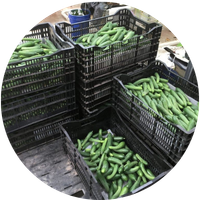
Farm to School with Ridge to Reef Farm on St. Croix, US Virgin Islands
Featuring Nate Olive, the owner of Ridge to Reef Farm on St. Croix, US Virgin Islands. Nate talks about the innovative market-diversification strategies that have contributed to his farming success and the challenges and opportunities of the St. Croix market.

Facilitating School Food Sales through Flexibility and Relationship Building
Featuring Growtopia Farms owner Cody Brown and Matt Hanson from the Central Texas Food Hub, a social enterprise of the Central Texas Food Bank. Their conversation highlights their personal experiences and offers practical advice for developing strong producer-buyer relationships that support successful school food sales.

Abundant Montana "Meet Up" Meets with Success
Featuring Erin Austin of Abundant Montana and their recent online producer-buyer “meet-up event,” Abundant Connections. Erin discusses the need Abundant Montana saw that led to creating the event, the event’s format, what went well, who connected at the event, and what the future looks like for Abundant Connections.
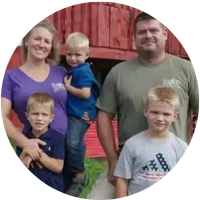
Strategies for Selling to Schools
A conversation with Crystal Hampton-Davis, co-owner of Davis Grown, a Pennsylvania livestock and produce farm. Learn how Crystal diversified the farm and made the move toward selling to local schools.

Pathways for Successful Farm to Institution Sales with Elliott Smith of Kitchen Sync Strategies
A visit with Elliot Smith, co-founder of Kitchen Sync Strategies (KSS). KSS started in 2019 to help connect more people to nourishing, impactful food and connect more big buyers with local producers. Learn how KSS supports the farm to school and institution supply chain and some exciting success stories around the development of food hub networks.
Webinar Recordings
Meat to School: Producer Planning for Success
In this Bringing the Farm to School webinar, a school food service director explains how she plans menus with local purchasing in mind. She also shares tips she wants every producer to know before selling to schools.
You'll learn:
- How smaller-scale vegetable producers can sell to schools
- How to work backward from school food contracts to time planting and production
- How to meet contract expectations and specifications for school food contracts
Bringing the Farm to School: Agricultural Producers' Toolkit

Resources for Facilitators
Bringing the Farm to School offers facilitators multiple resources to plan and implement your Local Producer Training, using the Agricultural Producers' Toolkit curriculum. Click below to explore these resources.
facilitator resources.png)
Resources for Producers
Bringing the Farm to School offers agricultural producers training, skill-building activities, and other resources to expand marketing efforts to schools. These are offered through Local Producer Trainings, but you can explore the resources on your own. You can contact us for technical assistance. Click below to learn more.
producer resources.png)
Case Studies
Bringing the Farm to School includes numerous case studies (in written, video and podcast format) that highlight how farmers have applied key concepts on their own farms or business operations. Click below to explore these case studies.
Have Questions?
For information about printing the curriculum and educational opportunities from our team, contact Tammy Howard, NCAT Agricultural Specialist at tammyh@ncat.org.
This project has been funded in part by federal funds from the U.S. Department of Agriculture, Food and Nutrition Administration through an agreement with the National Center for Appropriate Technology in partnership with the National Farm to School Network. The contents of this webpage do not necessarily reflect the views or policies of the U.S. Department of Agriculture, nor does mention of trade names, commercial products, or organizations imply endorsement by the U.S. government.
.png)
.png)
.png)