
How do you build farm to school programs that last—ones that survive grant cycles, staff turnover, and fluctuating administrative buy-in?
What are the structures and partnerships that help states create sustainable farm to school programs?
These were the questions that grounded a recent in-person retreat that brought together our Learning Collaborative, a cohort of 15 farm to school and procurement leaders.
Earlier this year, the National Farm to School Network (NFSN) launched the second phase of our Farm to School Coordinators Project with a focus on strengthening local procurement momentum and expanding the Community of Practice (CoP). As a part of this project, we also convened a small group of 15 farm to school and procurement leaders from across California, Michigan, Minnesota, and New York, called the Learning Collaborative.
The Learning Collaborative works to not only deepen their own knowledge and skills in farm to school innovation but also serve as leaders for the broader farm to school CoP. During our virtual CoP calls, Learning Collaborative members present their expertise and innovations around a topic, sparking discussion and connections. Our upcoming August CoP call, for example, will be led by Ja’Keia Person of Vibrant Seeds (New York) and Shelley R. Miller of Butte County Local Food Network (California), on the topic of “Farmers Market Partnerships and Youth Advocacy.”
Beyond these calls, members of the Learning Collaborative support each other in strategies they are exploring in their own communities. So far, there have been vibrant discussions around various modes of procurement such as direct-purchasing, micropurchasing, and partnering with food hubs, and which approach is most successful in various types of school districts.
Building Community & Farm to School Staying Power
One of the most anticipated benefits of the Learning Collaborative is an in-person retreat. This May, we brought the full cohort together on the beautiful and lush grounds of Shelburne Farms in Vermont. The retreat was designed and hosted by Dana Hudson and Jen Cirrillo of Shelburne Farms Institute for Sustainable Schools, a longtime NFSN partner. Shelburne Farms provides transformative learning and professional development opportunities for K-12 educators. As a collaborator for our Coordinators project, they’ve brought this expertise to offer our farm to school coordinators cohorts with in-person learning retreats, for our current Learning Collaborative as well as our pilot cohort in 2025.
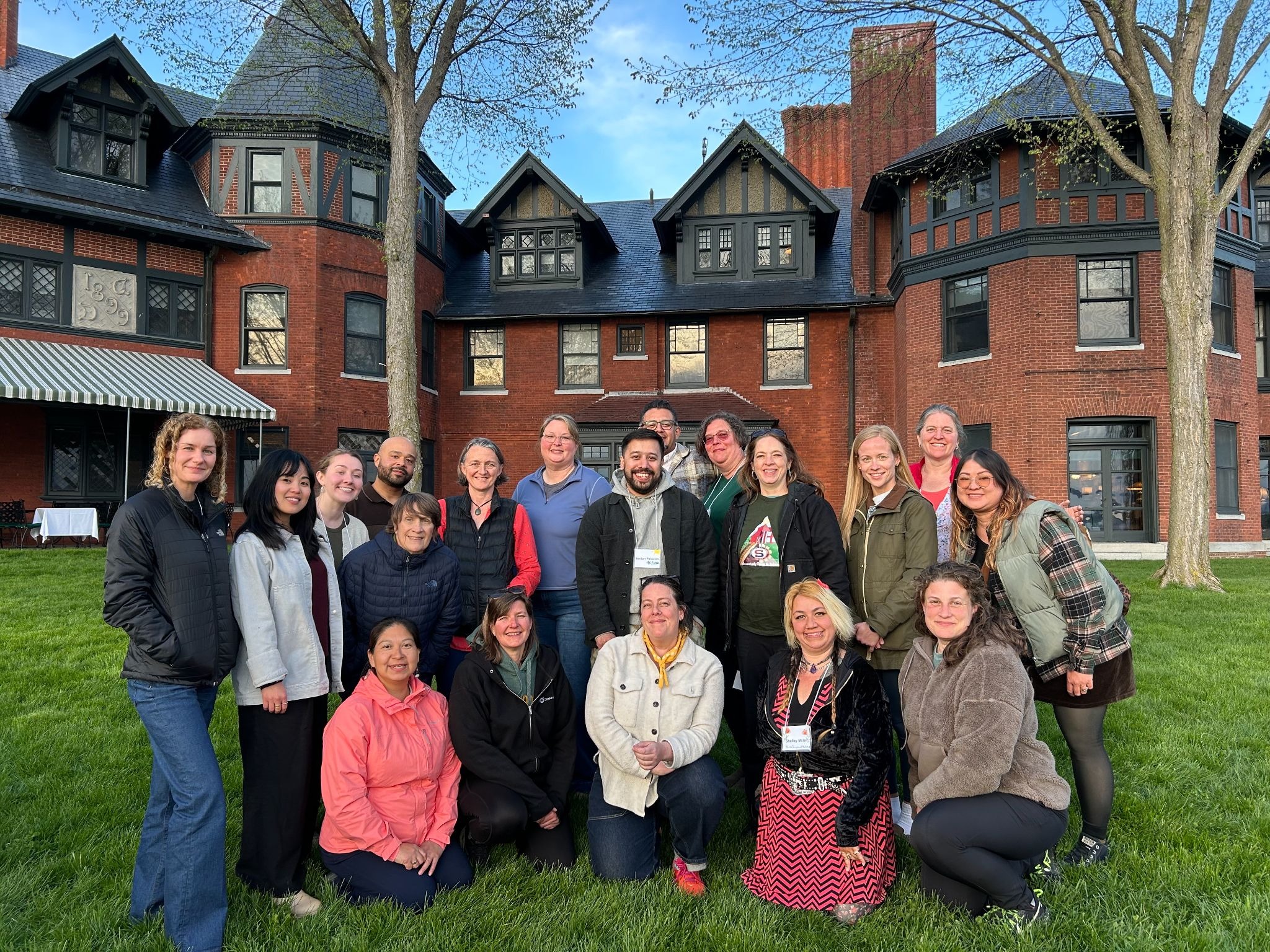
The retreat centered care, wellness, and community while offering opportunities for cohort members to experience and learn about farm to school in Vermont. The breakfast menu featured a warm carrot and cinnamon muffin, baked using a recipe developed by Vermont school food chefs. The opening introductions invited everyone to reflect on their values around farm to school work by sharing favorite “food memories” rooted in family and culture, followed by a presentation from Dana Hudson about the landscape and history of farm to school and early care in Vermont.
The retreat’s core skill-building activities and discussion topics explored the unique factors that contribute to farm to school’s staying power and the ability to sustain and embed these efforts within a community.
Dana Hudson engaged the Learning Collaborative in five common dilemmas and issues found in farm to school programming such as grant “trap,” staff turnover, and lack of administrative buy-in. The Learning Collaborative discussed various ways to approach these dilemmas and ultimately honed in on trust and authentic partnership building as key factors of sustaining farm to school programs:
- Moving at the speed of trust: Sustainable and systems-level change depends on investing time in developing authentic relationships.
- Centering relationships and community-based partnerships: Long-term success required collaboration across various roles, including different actors in the food system – producers, school administrators, families, and local organizations.
- Thinking about impact and addressing underlying obstacles: Asset-lens approach to problem solving can often encourage celebrating small wins or short-term solutions but with an eye for the long-term impact.
- Ensuring that solutions are tailored by the school district or community: Recognition that programs should not be one-size-fit-all; effective strategies take into account unique needs, assets, and priorities of each community.
Farm to School in Action, Out in the Community
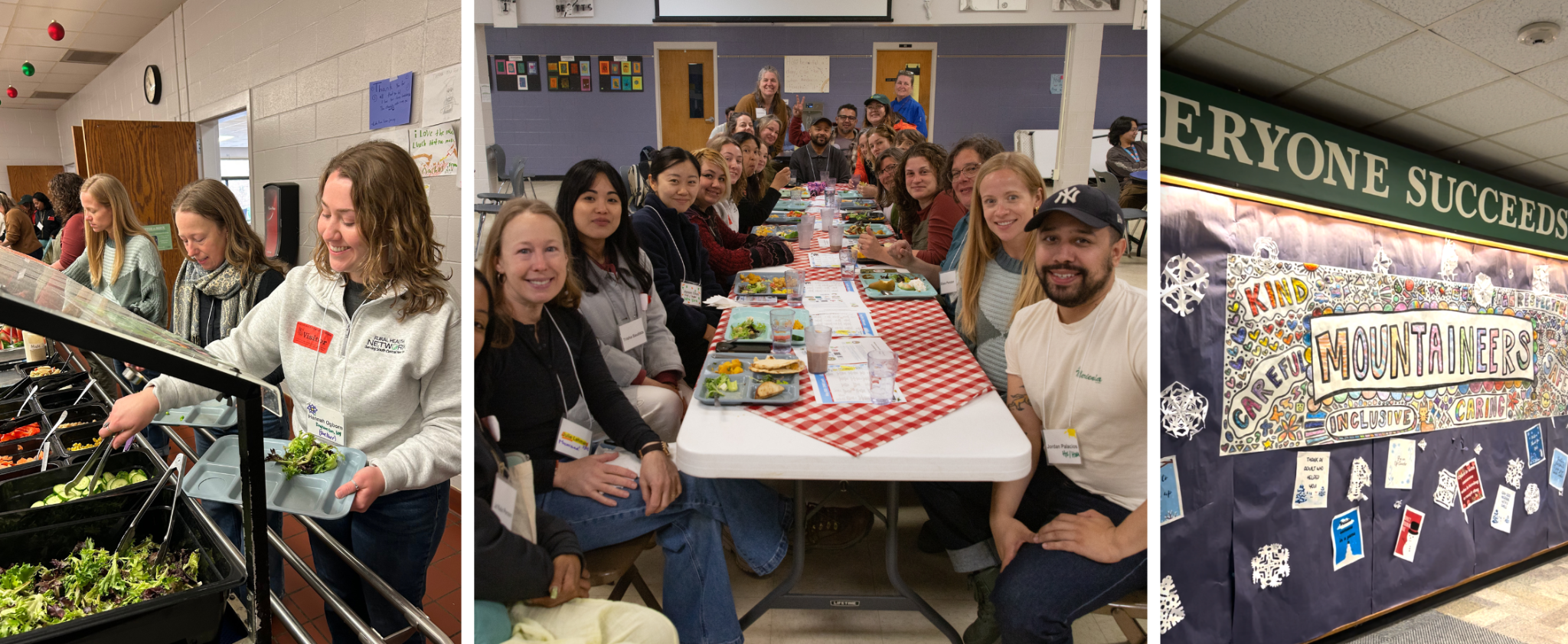
In addition to the programming held at Shelburne Farms, NFSN and the Learning Collaborative also visited two Vermont middle schools with active farm to school programs.
At Williston Central School, Learning Collaborative members met an educator, Lynn Brown, and a student representative whose passion has transformed food education into an integrated part of school life. Students care for chickens, help tend the garden, feed mealworms, and participate in hands-on learning experiences. Students at this school routinely connect agriculture to science, nutrition, social studies, and environmental stewardship.
At the second school, Camels Hump Middle School, we saw the operational side of farm to school on a tour guided by their food service director, Karyl Kent. NFSN and the Learning Collaborative joined the students for lunch in the cafeteria and learned how district leaders successfully built administrative support for local procurement. This included installing a bulk milk dispenser, sourcing milk from a local farm. Paired with reusable cups and a self-serve system, the dispenser also cut down on single-use waste. Students managed the compost station, which was another fantastic way students were engaged as leaders.
Strengthening Farm to School Coordinators Local Procurement Momentum
The Shelburne Farms retreat reinforced that sustaining farm to school requires more than the act of purchasing local foods. This effort depends on cultivating strong relationships, building supportive systems, investing in leadership and staffing, and creating structures that allow programs to thrive, especially amidst challenging policy and funding landscapes.
As the Learning Collaborative continues its collective work, members and NFSN will carry these lessons back to their local communities also while sharing within the broader farm to school coordinators Community of Practice (CoP). These CoP convenings are still happening virtually through December.
In support of our wider network of farm to school practitioners, NFSN and the Learning Collaborative are also putting together a new set of resources to be published by the end of the year. These resources will seek to further build the case for farm to school coordinator investment as well as position this role as a way to strengthen policy, systems, and environmental change work through farm to school activities.
As part of this continued investment in local farm to school coordination, NFSN will host a pre-meeting dedicated to farm to school coordinators and those in similar positions during NFSN’s Partner Meeting week, coordinated in concert with the California Farm to School Summit this October 13-15, 2026.
Thank you to Builders Vision Philanthropy for supporting National Farm to School Network and this project.